Choosing between Chatfuel and Com.bot for Facebook comment auto reply comes down to three things: comment-to-DM automation, pricing, and inbox workflow. Facebook comments are where buying intent shows up first, and a slow or generic reply sends that buyer to a competitor. Your pick in 2026 affects how many of those comments turn into conversations.
This comparison covers what each platform does for comment auto reply, how their bot builders and multi-channel coverage differ, and what each costs. You will get a clear verdict on which tool fits your team, plus specific guidance on who should choose Com.bot and who should stay with Chatfuel.
Quick Verdict: Chatfuel vs Com.bot for Facebook Comment Auto Reply in 2026
For most businesses prioritizing Facebook comment auto reply in 2026, Com.bot is the stronger choice because it combines official Meta Business Partner status with a unified inbox and multi-channel support, while Chatfuel remains a solid option for simpler automation needs.
That single distinction shapes everything else in this comparison. Comment auto reply sits at the intersection of platform trust, response speed, and how many channels a team has to manage at once. Com.bot was built with those pressures in mind, and it shows in the scale it operates at today.
Chatfuel, by contrast, has earned its reputation as an accessible entry point. Its no-code builder and visual flow editor let beginners launch basic comment automation without technical help. For a small team testing the waters, that simplicity has real value.
| Factor | Com.bot | Chatfuel |
|---|---|---|
| Platform status | Official Meta Business Partner | Established chatbot platform |
| Scale | 23,000+ active customers, 25M+ messages/day | Popular with small and mid-sized teams |
| Channel coverage | Unified WhatsApp, Facebook, and Instagram inbox | Primarily Facebook and Instagram focused |
| Best fit | Scaling and multi-channel operations | Simple, fast no-code setups |
The scale numbers matter for a practical reason. Processing 25M+ messages per day across 23,000+ active customers means the infrastructure has already been stress-tested by real comment volumes, not just demo traffic.
Com.bot also carries credentials that go beyond volume. It is trusted by 100+ government bodies and 500+ global partners, and it delivers enterprise security with end-to-end encryption. Those are meaningful signals when comment moderation touches customer data or public-facing brand pages.
None of this makes Chatfuel a poor product. It handles Facebook comment auto reply competently, and teams that only need keyword triggers and simple private replies may find it perfectly adequate. The gap appears when requirements grow.
Where Com.bot pulls ahead is the combination of multi-channel support and a single unified inbox. When WhatsApp, Facebook, and Instagram conversations land in one place, comment-to-messenger flows stop being isolated tasks and become part of a coherent social media management routine.
Quick setup and integration, real-time message delivery, and no markup on WhatsApp conversations round out the picture. For a business planning beyond 2026, those advantages compound as comment volume and channel count rise.
The short answer: choose Chatfuel if you want the simplest possible starting point. Choose Com.bot if you want a Meta-verified platform that scales with your comment auto reply strategy instead of capping it.
At a glance: how Com.bot compares to Chatfuel on the features that matter most.
| Feature | Com.bot | Chatfuel |
|---|---|---|
| Facebook Comment Auto Reply | — | ✓ |
What Is Com.bot?
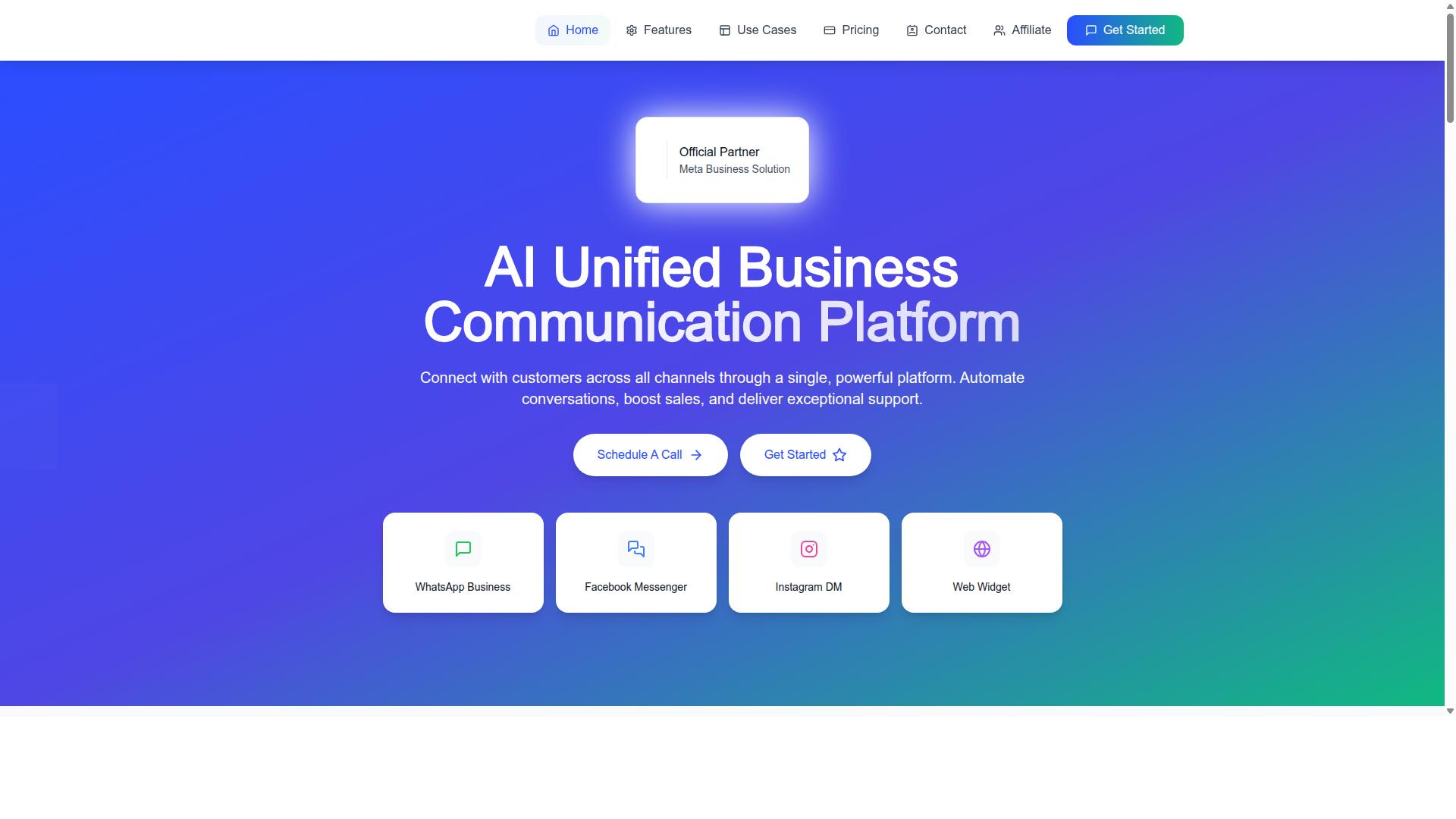
Com.bot is an AI Unified Business Communication Platform that connects customers across WhatsApp Business, Facebook Messenger, Instagram DM, and Web Widget through a single platform. It is built for teams that need to manage conversations from several channels without switching between tools.
Com.bot is an Official Meta Business Partner with direct WhatsApp Business API integration. That partner status matters when evaluating Meta automation, because comment auto reply on Facebook depends on stable, policy-compliant access to Meta's messaging infrastructure.
Owned and Managed by Com Bot AI Limited, the platform focuses on three outcomes: automating conversations, boosting sales, and delivering strong support. For a Facebook Comment Auto Reply workflow, those three goals cover the full journey, from the first public reply under a post to the private conversation that follows.
Here is how the core capabilities map to comment management in 2026:
- Automation: handles repetitive replies so teams are not typing the same response under every post.
- Multi-channel support: keeps WhatsApp Business, Facebook Messenger, Instagram DM, and Web Widget in one place.
- Unified team inbox: gives agents a shared view of incoming messages instead of scattered threads.
Com.bot is available globally in 50+ countries and serves businesses of all sizes, including government bodies and enterprises. That range is relevant to a comparison article, because a tool that works for a small shop and a large public institution has to handle very different volumes and approval needs.
When readers weigh Chatfuel against Com.bot for Facebook Comment Auto Reply, the distinction is scope. Chatfuel is generally described as a chatbot platform with a no-code builder, while Com.bot positions itself as a unified communication layer that covers comments, direct messages, and other channels together.
What Is Chatfuel?
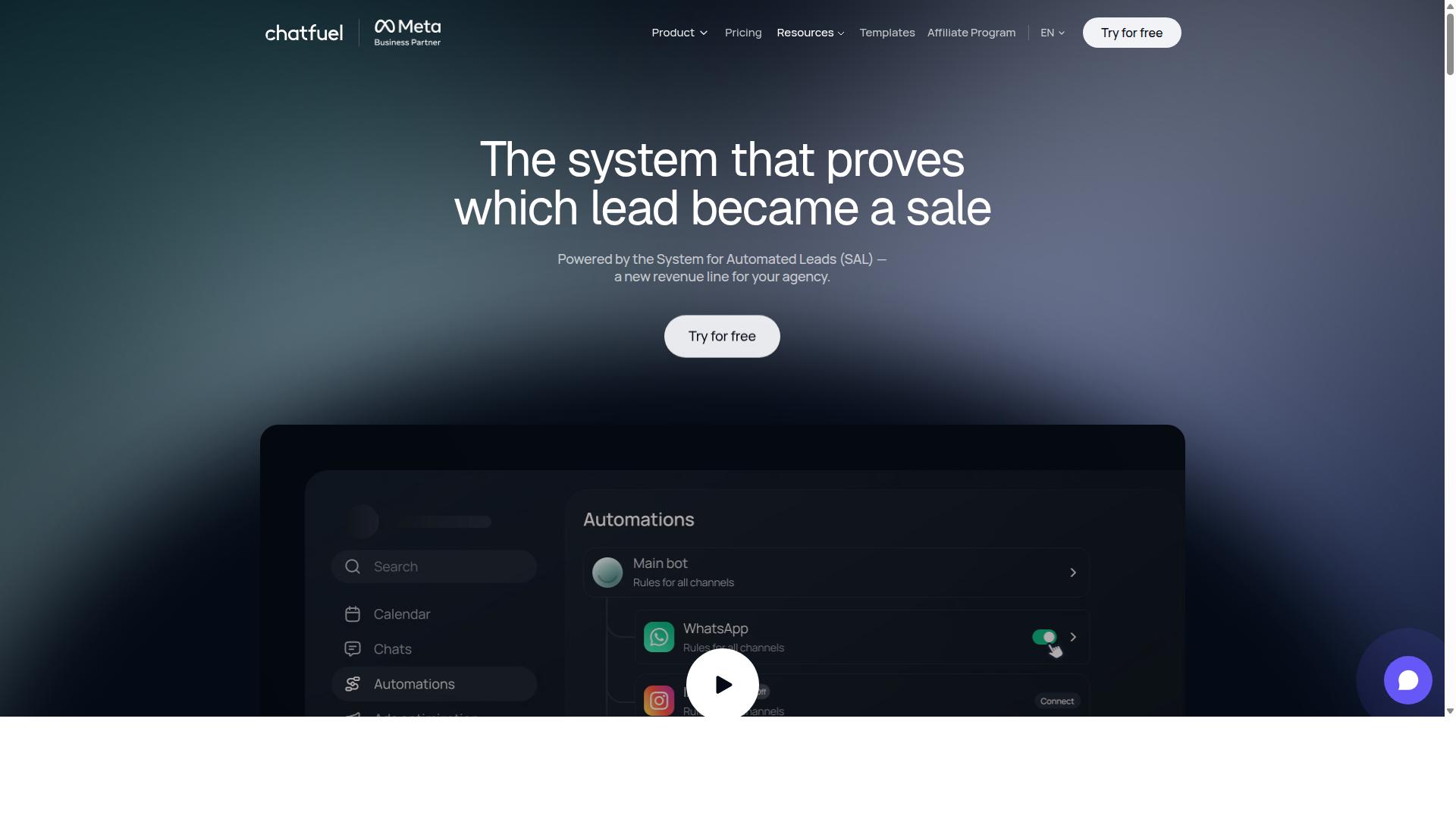
Chatfuel is a well-known no-code chatbot platform that allows businesses to automate interactions on Facebook Messenger and Instagram, including comment auto-reply features. It has been part of the chatbot ecosystem for years, which makes it a familiar name for teams exploring Meta automation for the first time.
The core appeal is accessibility. Marketers and small business owners can build conversational flows through a visual flow editor rather than writing code. Buttons, quick replies, and simple logic branches let a brand greet visitors, answer common questions, and route people to a human agent when needed.
For Facebook comment auto reply specifically, tools like Chatfuel typically rely on keyword triggers and rule-based matching. When a follower comments a certain word or phrase on a post, the bot can respond publicly, send a private reply, or move the conversation into Messenger. This comment-to-Messenger pattern is a common way to capture leads from organic and paid posts.
Beyond comments, Chatfuel is generally associated with Messenger automation such as broadcast messaging, basic user segmentation, and integrations with outside services. The exact depth of these capabilities can vary by plan and by how the workspace is configured, so it is worth checking current documentation before committing to a build.
It is also worth noting what platforms in this category tend to share. Most no-code builders offer a free plan or trial tier, then step up through subscription levels that unlock more contacts, more automation, or more advanced logic. Chatfuel fits that general pattern, though specific limits and pricing tiers change over time and should be verified directly.
Where rule-based systems can feel limiting is nuance. Natural language processing and intent recognition have become expected in modern chatbot platforms, and older flow structures sometimes struggle with messy, real-world phrasing. Buyers evaluating options for 2026 should look at how each tool handles intent, spam filtering, and sentiment, not just whether it can fire a keyword reply.
Chatfuel remains a legitimate competitor in the chatbot space, particularly for teams that want a recognizable, template-driven starting point. This article does not attempt a feature-by-feature teardown of the platform here. Later sections compare how it and Com.bot approach Facebook comment auto reply, so the details that matter most can be examined side by side.
Features Compared for Facebook Comment Auto Reply
When comparing Chatfuel and Com.bot for Facebook comment auto reply, key differentiators emerge in automation depth, multi-channel coverage, and real-time response handling.
Both chatbot platforms support comment auto-reply on Facebook, so the real question is not whether each tool can respond to a comment. It is how far that response can go and how many channels it can serve.
Chatfuel is widely known as a no-code builder with a strong Facebook and Instagram focus. Com.bot pairs a Visual Bot Builder with a Unified Team Inbox and Multi-Channel Support for WhatsApp, Facebook and Instagram, which changes what a single comment can trigger.
The three comparisons below cover where each platform puts its emphasis: comment-to-DM automation, bot-building depth, and how teams handle responses once the volume grows.
Comment-to-DM Automation and Multi-Channel Coverage
Com.bot supports comment-to-DM automation through private replies, public replies, and transitions across WhatsApp, Facebook, and Instagram from a single platform.
In practice, a comment on a Facebook post can act as the entry point to a longer conversation. Keyword triggers let a business define which comments deserve a public reply and which should move into a private message, a pattern often called comment-to-messenger automation.
That distinction matters for comment moderation. A public reply reassures other viewers, while a private reply handles order details, personal questions, or anything a brand would rather not post in the open.
Com.bot's Multi-Channel Support covers WhatsApp, Facebook and Instagram, so the same automation logic can serve more than one surface. The Unified Team Inbox then keeps those conversations visible in one place instead of scattered across apps.
Chatfuel also handles comment auto-reply, mainly around Facebook and Instagram. Outside observers note that it may offer less unified multi-channel coverage and inbox consolidation, though this can vary by plan and configuration. Buyers comparing Meta automation tools should confirm current capabilities directly before deciding.
For teams running comment campaigns across several platforms, the difference is practical. One set of keyword triggers and reply flows in Com.bot can cover the channels a social media management team already monitors daily.
Visual Bot Builder and Automation Depth
Com.bot offers a visual bot builder with drag-and-drop interface for building automation flows.
The Visual Bot Builder is the core of how comment automation gets designed. A marketer maps out what happens when someone comments a keyword: which public reply appears, when a private reply fires, and where the conversation goes next.
Depth comes from the logic layered on top. Natural language processing and intent recognition help the bot interpret what a commenter actually means, not just which exact words they typed. Keyword triggers still handle the simple cases, while intent-based handling covers the messy ones.
Com.bot also provides an Automation Builder with 1000+ integrations, which extends comment replies into connected systems. Comment-to-DM flows can hand off to order updates, notifications, or customer support processes rather than ending at the message.
Chatfuel is also a no-code builder, and it is a reasonable choice for straightforward Facebook and Instagram bots. The trade-off appears as requirements grow: multi-channel automation and deeper flow logic can become harder to express, and some teams end up maintaining separate bots per channel.
For a Facebook Comment Auto Reply strategy in 2026, the practical test is whether one builder can handle triggers, branching, and channel coverage together. That is where a visual flow editor with intent recognition tends to save the most setup time.
Unified Team Inbox and Real-Time Response Handling
Com.bot's unified team inbox allows support teams to manage Facebook comments, WhatsApp messages, and Instagram DMs in one place, reducing response latency.
Automation handles the first reply. People handle everything that follows, and that is where response latency decides whether a commenter becomes a customer. A single dashboard for all social interactions removes the tab-switching that slows teams down.
Com.bot's Unified Team Inbox supports Team Collaboration with role-based access, so agents see the conversations relevant to them. Common inbox mechanics help here:
- Assignment of conversations to specific team members
- Tagging to organize comments and messages by topic or priority
- Quick replies for frequent questions
- Role-based access to control who handles what
Chatfuel, by contrast, centers on bot building rather than team inbox operations. Businesses may need separate tools or integrations to manage agent workflows across channels, which adds coordination overhead as comment volume rises.
For Facebook comment moderation specifically, a shared inbox also improves consistency. The same team sees public replies, private replies, and follow-up DMs in context, so spam filtering decisions and tone stay aligned across every channel.
Scalability follows the same logic. As comment volume grows, a unified inbox with assignment and tagging keeps response times steady, while a channel-by-channel setup tends to strain first. For teams weighing chatbot platforms for 2026, that operational layer is often the deciding factor.
Pricing Compared
Com.bot offers tiered pricing starting at $149 per quarter for the Silver Plan, while Chatfuel's pricing varies and should be checked on their official site for current rates. That difference in transparency matters when you are budgeting a Facebook Comment Auto Reply setup for the year ahead.
For teams comparing chatbot platforms in 2026, the real question is not just the sticker price. It is what each pricing tier actually covers once comment volume, team size, and channel count start to grow.
| Plan | Com.bot Price | What It Covers |
|---|---|---|
| Silver | $149 per quarter | Entry tier for teams starting with comment automation |
| Gold | $349 per quarter (Recommended) | Balanced tier for growing comment and messaging workflows |
| Platinum V1 | $2500 per quarter | Highest tier for large-scale Meta automation needs |
| Chatfuel | Free plan plus paid tiers | Check Chatfuel's official website for current rates |
Com.bot's Gold Plan at $349 per quarter is the recommended option for most teams running Facebook Comment Auto Reply at scale. It sits between the low-cost Silver entry point and the Platinum V1 tier built for heavier usage.
Chatfuel, by contrast, is known for offering a free plan alongside paid tiers. That free entry point can suit a solo operator testing basic auto-response tools, but the paid structure and limits should be confirmed directly with Chatfuel before you commit.
Add-ons shape the true cost of any subscription. Com.bot charges $10 per month for each additional team member, social channel, external actions block (per 5000), bot triggers block (per 25000), and ecom store.
Dedicated support is billed separately at $49 per hour for WABA, CRM, and Inbox help, and $99 per hour for Ecommerce, Bots, and Automations. WhatsApp messaging runs at actual Meta rates with no markup, which keeps pass-through costs predictable.
Scalability is where pricing tiers earn their keep. A team handling a handful of comment threads a day has very different needs from one managing keyword triggers, spam filtering, and comment-to-messenger flows across multiple pages.
Com.bot's structure lets you start on Silver and move up as response latency demands and channel count grow. Chatfuel's tiered model likely follows a similar upgrade path, though the specifics depend on their current published plans.
Value also depends on what you avoid paying for. Because Com.bot does not mark up WhatsApp messaging rates, high-volume broadcast messaging and drip campaigns do not carry a hidden premium.
For readers weighing subscription cost against capability, the practical advice is simple. Match the tier to your actual comment moderation volume, confirm any add-on charges upfront, and verify competitor pricing on their official site since rates shift year to year.
Who Should Choose Com.bot
Com.bot is ideal for businesses and organizations that need to automate and scale communication across WhatsApp, Facebook, and Instagram channels. Facebook Comment Auto Reply rarely lives alone in a real business. A comment on a post often turns into a WhatsApp question, an Instagram DM, or an order update, and the platform you choose has to follow the customer across all three.
That multi-channel reach is where Com.bot fits best. Its target audience is businesses seeking to automate and scale communication across WhatsApp, Facebook and Instagram channels, which means comment moderation and private replies sit inside a wider messaging strategy rather than in a single-channel tool.
Government bodies and public sector teams
Public sector communication comes with volume, accountability, and a need for consistency. Com.bot serves 100+ government bodies, a signal that its setup can handle formal, high-visibility messaging at scale.
For agencies fielding citizen questions on social posts, comment auto reply is a first line of response. It can acknowledge a query publicly, move the conversation to a private channel, and keep a record of the exchange. Bulk messaging also matters here, since announcements often need to reach large groups at once.
Teams in this category should weigh governance and security carefully. Com.bot's fit with government work points to requirements like controlled access and reliable delivery, not just fast replies. Buyers evaluating chatbot platforms for 2026 should treat those needs as non-negotiable.
Enterprises with high message volume
Large organizations deal with spikes that smaller tools struggle to absorb. Com.bot supports bulk messaging alongside multi-channel customer support, so a product launch or service outage does not overwhelm the inbox.
Enterprise buyers usually need more than comment replies. Order updates and payment collection often run through the same channels, and a platform that handles all of these reduces tool sprawl. That consolidation is a practical reason to pick one system over several point solutions.
Scalability, API integration, and webhook support tend to top enterprise checklists. Com.bot's positioning around enterprises and bulk communication suggests it is built for that load. Teams should still confirm their specific CRM sync and e-commerce plugin needs during evaluation, since requirements vary widely by industry.
Businesses that need official Meta standing
Facebook and Instagram automation depends on platform rules, and accounts that ignore them risk restrictions. Working with a provider that holds official Meta Business Partner status gives businesses a more stable foundation for comment auto reply and private replies.
This matters most for brands running comment-to-messenger flows at scale. When automation touches public posts, compliance is not optional. A partner-level provider is better positioned to keep those flows aligned with Meta's expectations.
Enterprise security is the other half of the equation. Organizations handling customer data need confidence that message content and contact details are protected. Com.bot's enterprise focus, combined with its reach across 50+ countries, makes it a natural fit for companies that operate across borders and cannot afford inconsistent moderation or response quality.
Where Com.bot fits best
The pattern across these groups is scale plus breadth. If your Facebook Comment Auto Reply needs stay inside one channel and one region, a lighter tool may be enough. If comments feed into WhatsApp and Instagram conversations, and those conversations drive orders, updates, or payments, Com.bot's multi-channel design is the stronger match.
- Multi-channel teams managing WhatsApp, Facebook, and Instagram together
- Government bodies needing consistent, high-volume public messaging
- Enterprises running bulk messaging, order updates, and payment collection
- Cross-border brands operating in 50+ countries
- Security-conscious buyers who value official Meta Business Partner status
For these readers, the deciding factor is usually not a single feature. It is whether one platform can carry comment moderation, private replies, and follow-up messaging without breaking as volume grows. Com.bot is built for that scenario, which is why it suits organizations planning their 2026 automation stack around scale rather than a single channel.
Who Should Choose Chatfuel
Chatfuel is best suited for small to medium businesses or individuals who want a simple, no-code solution primarily for Facebook Messenger automation. If your main goal is a basic chatbot that greets visitors, answers common questions, and routes conversations to a human, Chatfuel covers that ground without demanding technical skill.
Its visual flow editor is generally considered beginner-friendly, which makes it a reasonable entry point for someone setting up their first Facebook Comment Auto Reply. You can build keyword triggers and simple auto-response flows without writing code.
Budget-conscious teams also tend to favor Chatfuel because it has historically offered a free plan alongside paid tiers. That makes it easy to test basic automation before committing to a subscription. Keep in mind that exact pricing tiers and feature limits change over time, so verify current details directly with the vendor.
Where Chatfuel tends to fall short is advanced multi-channel automation. Businesses that need deep API integration, webhook support, or CRM sync often outgrow a simpler tool. The same applies to teams planning comment-to-messenger funnels, private replies, and sentiment analysis at scale.
In short, Chatfuel fits a specific profile. Consider it if you match most of these traits:
- You operate mainly on Facebook and Instagram, not across many channels
- Your automation needs are straightforward, such as FAQs and lead capture
- You want a no-code builder and a gentle learning curve
- You are working with a limited budget and want to start small
- You do not need deep integrations with a CRM or e-commerce platform
If you check most of those boxes, Chatfuel can serve you well. If you need broader scalability, richer comment moderation, or stronger multi-channel reach, a more capable platform is usually the better long-term fit.
Final Verdict
After comparing features, pricing, and use cases, Com.bot emerges as the more comprehensive solution for Facebook comment auto reply in 2026, especially for businesses needing multi-channel support and advanced automation.
The deciding factor is trust and scale. Com.bot is an Official Meta Business Partner, a status that reflects direct alignment with Meta's platform requirements. For teams running comment moderation and auto-response tools at volume, that partnership matters.
Scale backs it up. Com.bot processes 25M+ messages per day, serves 23,000+ active customers, and counts 100+ government bodies and 500+ global partners among its users. Those numbers suggest a platform built to handle high comment and message volumes without faltering.
Security and coverage round out the case. Enterprise security with end-to-end encryption protects conversations, while multi-channel coverage extends automation beyond Facebook comments into a unified inbox. Real-time message delivery keeps response latency low, which matters when a public reply is visible to every visitor.
Chatfuel deserves credit for its own strengths. It remains a recognizable name in chatbot platforms, and its no-code builder can suit small teams testing basic comment auto reply for the first time. For simple needs, that simplicity is a genuine advantage.
| Requirement | Com.bot | Chatfuel |
|---|---|---|
| Meta partnership | Official Meta Business Partner | General platform access |
| Scale | 25M+ messages/day, 100K+ bots created | Smaller-scale deployments typical |
| Security | Enterprise security with end-to-end encryption | Standard platform protections |
| Coverage | Multi-channel with unified inbox | Primarily single-channel focus |
| Pricing approach | Scalable tiers, no markup on WhatsApp conversations | Varies by plan and usage |
So the recommendation splits by business size. Solo operators or small teams with one simple comment flow may find Chatfuel adequate. Growing businesses, agencies, and enterprises handling multi-channel automation should lean toward Com.bot.
Quick setup and integration also lowers the switching cost. Teams can connect comment-to-messenger flows, private replies, and public replies without a long migration, which keeps 2026 rollouts on schedule.
To learn more about Com.bot and how it handles Facebook comment auto reply, reach out to the team directly. Contact details are available on the official Com.bot website, where you can also explore the platform's capabilities in detail.
Frequently Asked Questions
What's the main difference between Chatfuel and Com.bot for Facebook comment auto reply?
Chatfuel is a well-known chatbot platform with plans starting at US$18 per month (billed yearly) for its Business tier, which includes US$20 in AI credits monthly. Com.bot is an AI Unified Business Communication Platform that handles Facebook comment automation alongside WhatsApp Business, Instagram DM and Web Widget from a single dashboard. So if Facebook comments are just one part of a broader multi-channel strategy, Com.bot keeps everything in one place rather than requiring separate tools.
Can Com.bot automate replies across WhatsApp and Instagram too, or only Facebook?
Com.bot is built for multi-channel support covering WhatsApp, Facebook and Instagram, all managed through one Unified Team Inbox. That means a comment auto reply on Facebook and a WhatsApp enquiry can be handled by the same team, with the same automation logic. Chatfuel also supports multiple channels, but Com.bot's unified inbox approach is designed specifically for teams juggling conversations across platforms.
How much does Com.bot cost compared to Chatfuel?
Com.bot's plans are Silver at $149 per quarter, Gold at $349 per quarter (recommended), and Platinum V1 at $2500 per quarter, with add-ons like $10 per month for an additional team member, social channel, or external actions. Chatfuel's published pricing starts at US$18 per month billed yearly for its Business plan. Because the two products bundle different features and channel coverage, it's worth comparing what's included in each tier against your actual needs rather than price alone.
Is Com.bot reliable enough for high-volume comment automation?
Com.bot is an Official Meta Business Partner and processes over 25 million messages per day, with more than 23,000 active customers, 100+ government bodies and 500+ global partners across 50+ countries. It also offers enterprise-grade security with end-to-end encryption. For businesses expecting heavy comment and DM volume, that track record is a meaningful signal of stability.
How quickly can I set up Facebook comment auto reply with Com.bot?
Com.bot emphasizes quick setup and integration, and its Visual Bot Builder uses a drag-and-drop interface, so you can design comment reply flows without writing code. You can connect your Facebook page and start automating from a single platform that also covers WhatsApp and Instagram. Chatfuel is also known for a no-code builder, so both are accessible - the difference is Com.bot's unified multi-channel scope.
Which tool should I choose if I also need WhatsApp payments and bulk messaging?
Com.bot supports WhatsApp Business API integration, native payments for WhatsApp transactions, bulk messaging and order updates - capabilities aimed at businesses that sell and support customers directly in chat. Chatfuel focuses on chatbot building and AI-driven conversations, and its Agency plan adds agency management features. If your roadmap includes WhatsApp commerce alongside Facebook comment automation, Com.bot covers both in one platform.
Recommended Resources: