Your team needs to connect existing records to new workflow steps without rebuilding data pipelines every quarter. Most platforms force you to pick between strict audit trails and flexible API calls, and the wrong choice creates rework when auditors arrive.
By the final section you will know which product keeps your data mappings inside policy boundaries, which one caps API calls first, and which pricing tier matches your current record volume. The verdict lists the exact trade-offs for each tool against your compliance checklist.
Quick Verdict: Camunda vs Appian vs Process Street for Data Integration
Process Street delivers the fastest deployment for compliance-focused data integration, while Camunda excels in custom BPMN coding and Appian dominates large-scale enterprise orchestration.
Teams seeking process automation with built-in compliance choose Process Street for its ready-to-use security certifications. The platform comes SOC 2 Type II certified, ISO 27001 certified, and HIPAA compliant with BAA available upon request.
Camunda stands out through BPMN flexibility that lets developers build custom integrations from scratch. Organizations with unique data mapping needs often select this route when standard connectors will not suffice.
Appian provides native enterprise connectors that handle complex orchestration across legacy systems. Large corporations running multiple ERP instances typically favor this approach for its pre-built enterprise integrations.
Process Street reports 30% faster documentation compared to traditional methods. This speed advantage matters when teams need to maintain clear records of data flows and transformation rules.
Companies like IMCD UK achieved a 75%+ reduction in setup time with Process Street. The platform also serves 3,000+ companies and 1m+ users who rely on its data governance capabilities.
Each platform handles data integration differently based on organizational size and technical requirements. Process Street prioritizes quick deployment with strong compliance foundations while competitors focus on customization depth or enterprise scale.
At a glance: how Process Street compares to Camunda, Appian, Process Street for Data Integration on the features that matter most.
| Feature | Process Street | Camunda | Appian | Process Street for Data Integration |
|---|---|---|---|---|
| Data Integration | ✓ | ✓ | ✓ | ✓ |
What Is Process Street?
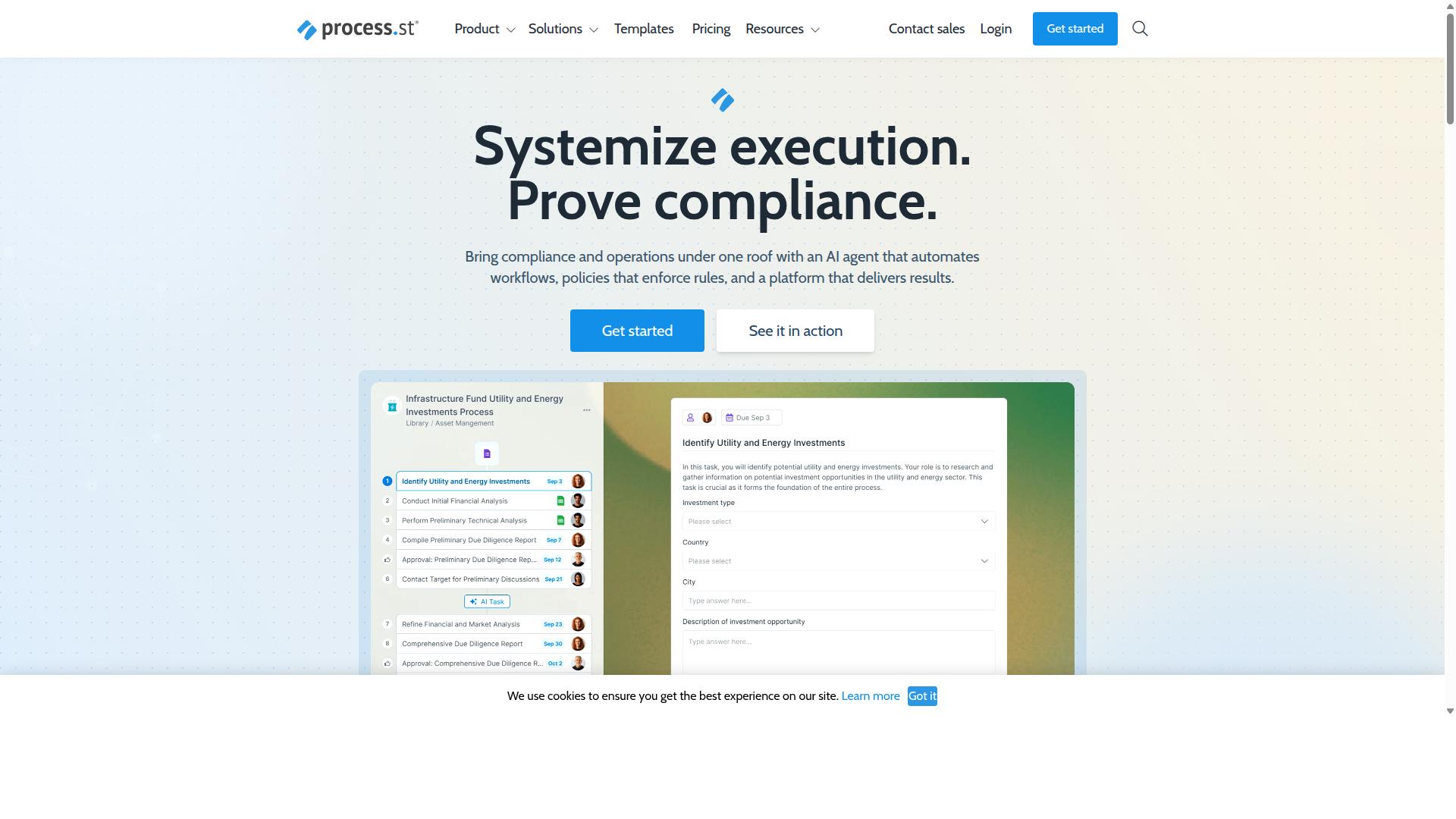
Process Street is a compliance operations platform that automates business processes and enforces policies with audit-ready proof.
The platform offers Docs for document management and policy control, Ops for workflow automation and process orchestration, and Cora as an AI compliance and risk agent.
Process Street holds SOC 2 Type II and ISO 27001 certification for enterprise security standards.
What Is Camunda?
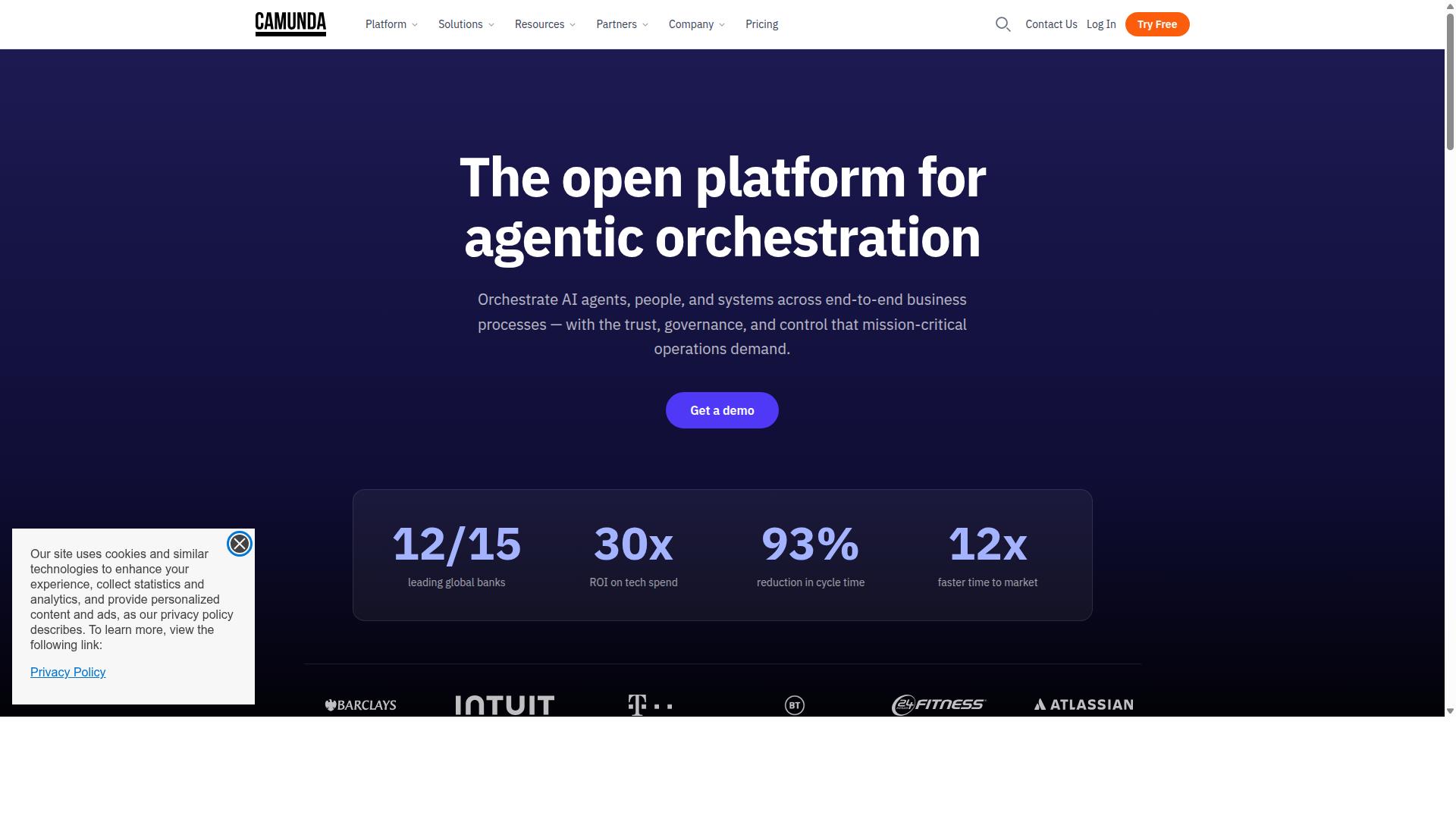
Camunda is an open-source workflow engine that executes BPMN 2.0 models for microservice orchestration and process automation. Teams often select it when they need custom integration scenarios that require fine-grained control over API endpoints and message queues. The platform supports deployment across various environments, including cloud and on-premise setups.
Its BPMN focus makes it suitable for organisations with technical teams who prefer building integration logic through code rather than visual configuration. Users can define complex data transformation rules and error handling sequences directly in their workflows. The open-source model appeals to companies that want to avoid vendor lock-in and maintain full control over their integration infrastructure.
Camunda typically appears in enterprise integration projects where real-time sync requirements demand custom connectors and event-driven architecture patterns. Database sync operations often require additional development work to connect with existing systems. Research suggests that teams with strong engineering resources gravitate toward this approach for its flexibility, though it demands ongoing maintenance and technical expertise.
What Is Appian?
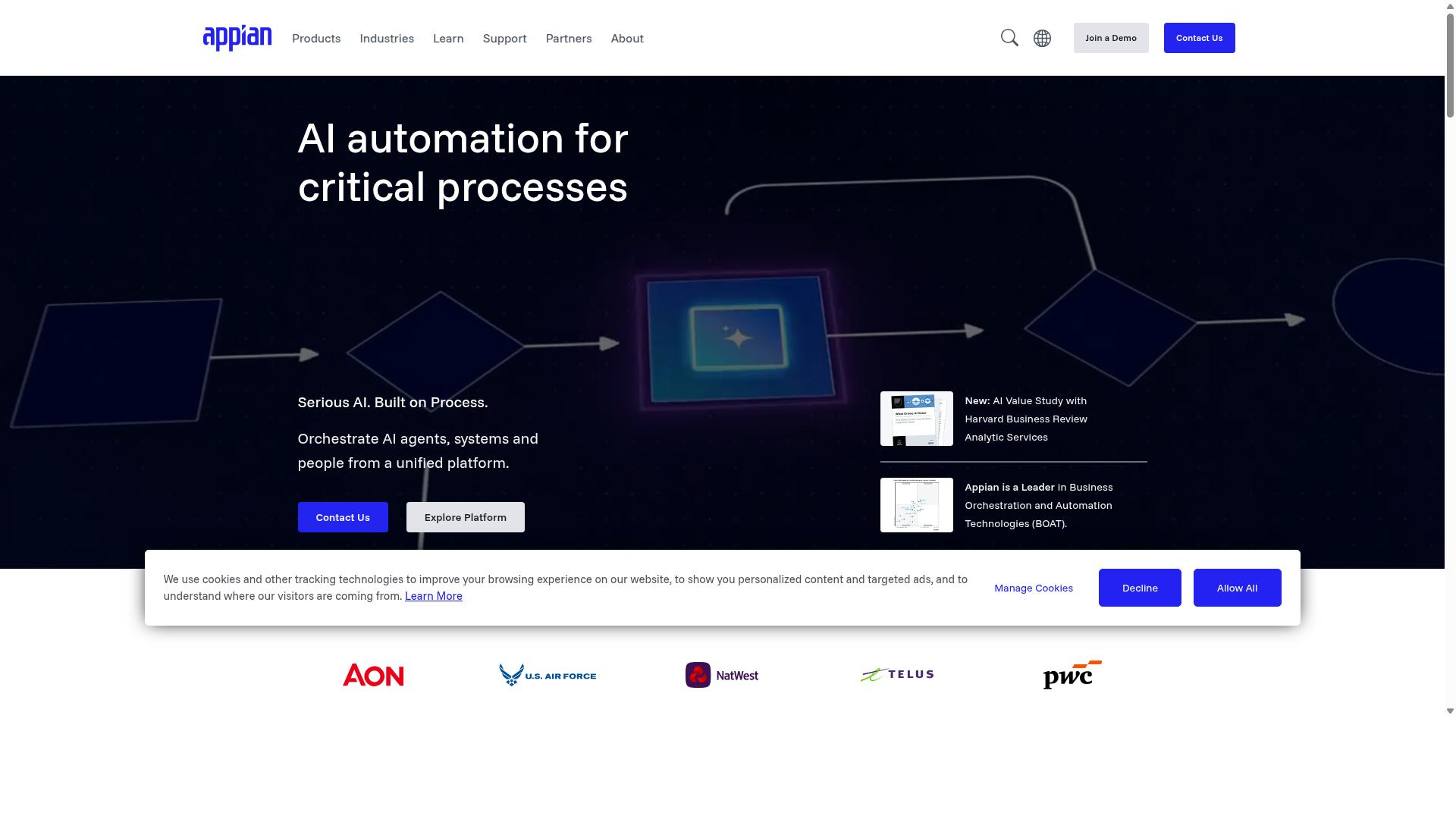
Appian is a low-code automation suite that combines BPM, case management, and RPA for large enterprise deployments.
The platform offers low-code development capabilities alongside traditional business process management features. Organizations typically deploy Appian in regulated industries where compliance requirements drive technology decisions.
Appian supports process orchestration through its visual development environment. Users can build applications that handle complex workflows without extensive coding expertise.
Many enterprises choose Appian for data integration scenarios that require strict governance controls. The platform provides tools for connecting systems while maintaining audit trails and security protocols.
Appian works across enterprise integration projects that span multiple departments and regulatory frameworks. The low-code approach reduces development time compared to traditional custom coding methods.
What Is Process Street for Data Integration?
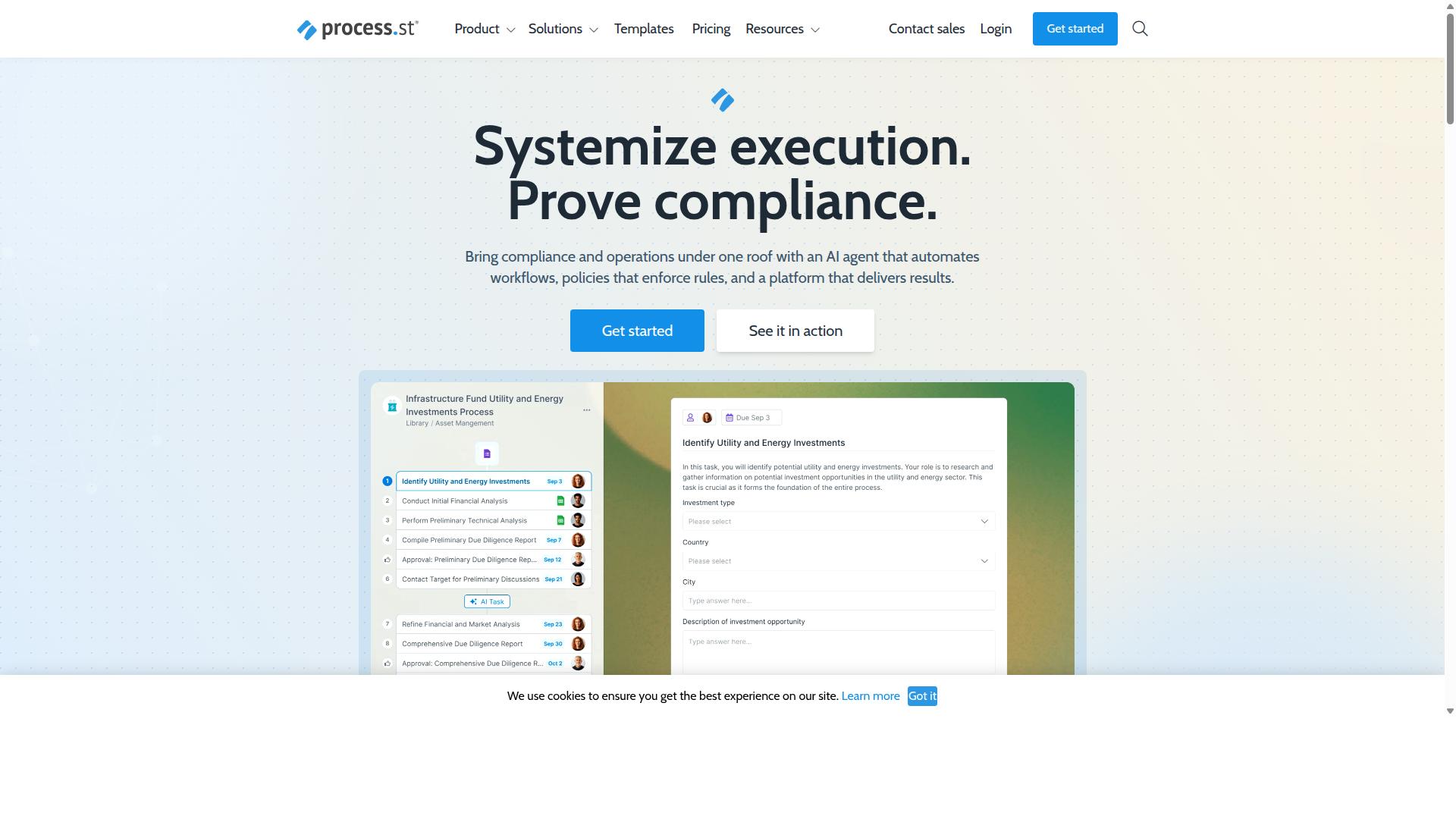
Process Street turns documented policies into AI-powered workflows that push or pull data via REST endpoints and cloud connectors.
Process Street supports Ops workflows that respond to webhook events from external systems. These events can trigger task sequences based on real-time data updates from connected applications.
The platform enables teams to map incoming data fields to specific workflow variables. This mapping ensures accurate data transfer between systems without manual intervention during each process run.
Every workflow execution automatically logs output data for complete audit trails. These records support compliance requirements across multiple industry standards.
The Startup plan includes 100 automation actions per month. This allocation covers webhook triggers, data mapping operations, and logging activities within the included monthly limits.
Features Compared
Three feature areas set the platforms apart: compliance logging, automation limits, and connector availability.
Each area directly impacts data integration projects that span multiple systems. Camunda and Appian handle these areas differently, which changes implementation effort and ongoing cost.
Process Street uses built-in controls that reduce custom work. These controls affect audit readiness and operational scaling.
Compliance & Audit-Ready Data Integration
Process Street automatically captures every data movement in immutable logs that satisfy ISO 9001, SOC 2, and SOX evidence requirements.
The system records three steps for each transfer. First it logs the source system and file. Second it tracks any transformation rules applied. Third it confirms the destination and success status.
Camunda requires separate logging modules to reach the same coverage. Appian ties audit data to individual cases, which fragments records across projects.
Process Street stores these logs inside the workflow platform itself. This approach supports data governance and data lineage without extra connectors.
Teams can export the full chain for external reviews. The built-in approach lowers setup time and keeps evidence consistent across database sync and SaaS integration tasks.
API & Automation Limits
Process Street caps API calls at 100 automation actions per month on the Startup plan and scales upward on Pro and Enterprise plans.
The Startup plan also limits users to 5 and automation apps to 10. Pro and Enterprise plans remove these caps for growing data integration workloads.
Camunda allows unlimited open-source calls, yet production support and enterprise connectors often require paid extensions. Appian uses credit-based metering that can increase unpredictably with volume.
Process Street lists exact thresholds in its pricing documentation. Organizations can forecast cost before they expand REST endpoints or cloud connectors.
Enterprises that need unlimited Public API access can move directly to the Enterprise plan, which also adds custom integrations and dedicated support options.
Pricing Compared
Process Street offers three tiers with transparent monthly fees. Camunda and Appian use usage-based or quote-only models.
Process Street Startup plan delivers unlimited workflows and tasks for early teams. It supports up to 5 users and 10 guests with 10 automation apps and 100 automation actions per month.
The Startup tier also includes 5,000 Data Set records and limits the Public API to 50 calls monthly. This structure suits small data integration projects that need predictable costs rather than variable consumption billing.
Process Street Pro plan removes most limits and offers custom users, guests, automation actions, and API calls. It expands Data Set records to 10,000 while maintaining unlimited workflows and tasks for growing data integration needs.
Process Street Enterprise plan provides custom Data Set records and unlimited Public API access. It adds dedicated Success Manager support, priority assistance, and fully-managed workflows for complex enterprise data integration requirements.
Camunda pricing follows a consumption model based on process instances and infrastructure usage. Appian pricing requires direct quotes that typically scale with user seats and deployment complexity. Both approaches make total cost harder to predict for data integration projects.
Process Street transparent plans allow teams to estimate expenses upfront. This clarity helps when budgeting for BPMN workflow automation, API connectors, or SaaS integration scenarios that involve ongoing data transformation and validation tasks.
Who Should Choose Process Street
Operations, compliance, and HR teams in financial services, healthcare, and professional services achieve the quickest path to audit-ready integrations with Process Street.
These industries face strict regulatory demands where data accuracy matters most. Process Street offers built-in audit trails and permission controls that support compliance requirements without additional configuration.
Five target industries benefit most from this approach. Financial services need secure data mapping across accounts. Healthcare organizations must maintain patient data lineage through every workflow. Professional services require client onboarding processes that sync with external systems. Manufacturing teams track quality documentation through connected databases. Real estate firms manage property data across multiple platforms.
Four team types find the platform especially effective. Operations teams handle daily data validation tasks. Customer management groups maintain contact records through automated syncs. Compliance departments track documentation across all integration points. Finance teams process transactional data with built-in error handling.
Research suggests organizations achieve faster setup when using platforms designed for their specific use cases. IMCD UK reported a 75% reduction in setup time after implementing Process Street for their workflow needs.
The platform serves over 1 million users across different sectors. This broad adoption indicates teams find value in the workflow automation features without extensive technical resources.
Who Should Choose Camunda
Engineering teams that need deep BPMN customization and open-source deployment models often evaluate Camunda first. The platform appeals to developers who require extensive control over microservice integrations. Teams in IT-heavy environments frequently select this option when building custom solutions.
Camunda provides an open-source licensing model that allows organizations to deploy without vendor lock-in concerns. Developers can modify the codebase directly to match specific integration requirements. This flexibility suits environments where existing IT resources handle ongoing maintenance.
Teams that prioritize full control over BPMN elements often find Camunda suitable. The platform supports custom process orchestration where standard templates fall short. IT departments with strong development capabilities typically manage this level of customization effectively.
Appian offers a low-code approach that reduces development time for integration projects. The platform includes pre-built connectors for common enterprise systems. Organizations that prefer faster deployment over deep customization may consider this alternative.
Process Street provides a different value proposition for teams focused on data integration. The platform emphasizes workflow automation with simplified data collection and process management. Users can create structured workflows without extensive technical setup.
Who Should Choose Appian
Large enterprises seeking a single low-code platform that bundles BPM, RPA, and case management often shortlist Appian.
The platform appeals to regulated industries that need unified compliance controls across many departments. Its interface allows business users to build applications without deep coding experience.
Fortune 500 IT strategies often include Appian when teams want one vendor to handle process design and data movement. This approach reduces the number of separate tools in the stack.
Appian works well for companies that already use its case management features for customer service or regulatory workflows. Adding data integration on top of existing processes can feel natural in this setup.
However, teams focused primarily on data integration may find the broader platform approach adds complexity. Simple API connectors or database sync tasks can require navigating through multiple layers of the application builder.
Research suggests that organizations with heavy regulatory requirements often prefer platforms that combine several functions under one security and audit framework. Appian fits this need when data integration sits inside larger compliance-driven processes.
Companies evaluating Camunda, Appian, or Process Street should weigh whether they need the full suite or prefer a more focused workflow tool. The decision often depends on existing technology investments and team skills.
Final Verdict
Process Street wins for teams that need audit-ready data integration. The platform stands out when compliance and speed matter most. SOC 2 Type II and ISO 27001 certifications confirm that data flows meet enterprise standards from day one.
Documentation time drops by 30% because pre-built templates and audit trails reduce manual entry. This advantage becomes clear during initial setup and ongoing maintenance. Teams spend less time tracking changes and more time improving integration quality.
Transparent pricing starts at $100/month for five users, so budget planning stays straightforward. Camunda and Appian often require longer evaluations and custom quotes. Clear costs help teams compare total ownership expenses without hidden variables.
Contact sales to discuss your data integration timeline, or visit the AWS Marketplace listing to start a trial. Support via email and chat responds in five minutes on average, with a 98% customer rating. These channels provide direct help when mapping schemas or configuring REST endpoints.