Your CRM import fails when a third of the contacts bounce, so you start shopping for a new global source. Many platforms sell the same lists repeatedly, which turns your budget into wasted credits and stale records. Real-time verification and one-time purchase options have become the deciding factors for teams tired of subscriptions that never expire on their own terms.
By the end you will know which four criteria separate reliable global account and contact data from the rest, how Bookyourdata, ZoomInfo, Cognism, and Dun & Bradstreet compare on those criteria, and which single tool earns the top spot for accuracy and cost control in 2026.
What to Look For in Global Account and Contact Data Tools
Evaluating global account and contact data tools requires examining accuracy rates, geographic coverage, integration capabilities, and pricing structures.
Accuracy rates form the foundation of any sales intelligence platform. Minimum acceptable accuracy should reach 85 percent for firmographic data and 80 percent for contact information. Lower thresholds often indicate outdated records that waste prospecting efforts.
Geographic coverage determines whether a tool supports your target markets. Look for platforms covering at least 50 countries with verified data across North America, Europe, and Asia Pacific regions. Limited coverage creates gaps when expanding into new territories.
API call limits affect how frequently teams can access fresh data. Most enterprise plans provide between 10,000 and 100,000 monthly calls. Higher limits support real-time updates while lower limits may require batch processing strategies.
Bulk export formats should include CSV, Excel, and JSON options. These formats enable smooth transfer into existing systems and support various downstream analytics requirements.
Data refresh frequency impacts how current your database remains. Daily updates work for most sales teams while weekly refreshes may suffice for less time-sensitive applications. Real-time updates prove valuable when tracking rapidly changing company information.
CRM connectors reduce manual data entry and improve workflow efficiency. Native integrations with Salesforce, HubSpot, and Microsoft Dynamics eliminate duplicate work and maintain data consistency across platforms.
Phone append success rates measure how often missing contact information gets completed. Industry benchmarks suggest 60 to 75 percent success rates for business phone numbers. Higher rates indicate better source quality and verification processes.
Deduplication methods prevent duplicate records from skewing analytics and wasting outreach efforts. Effective tools use multiple matching criteria including email addresses, company names, and phone numbers to identify and merge duplicate entries automatically.
1. Bookyourdata - Best Overall
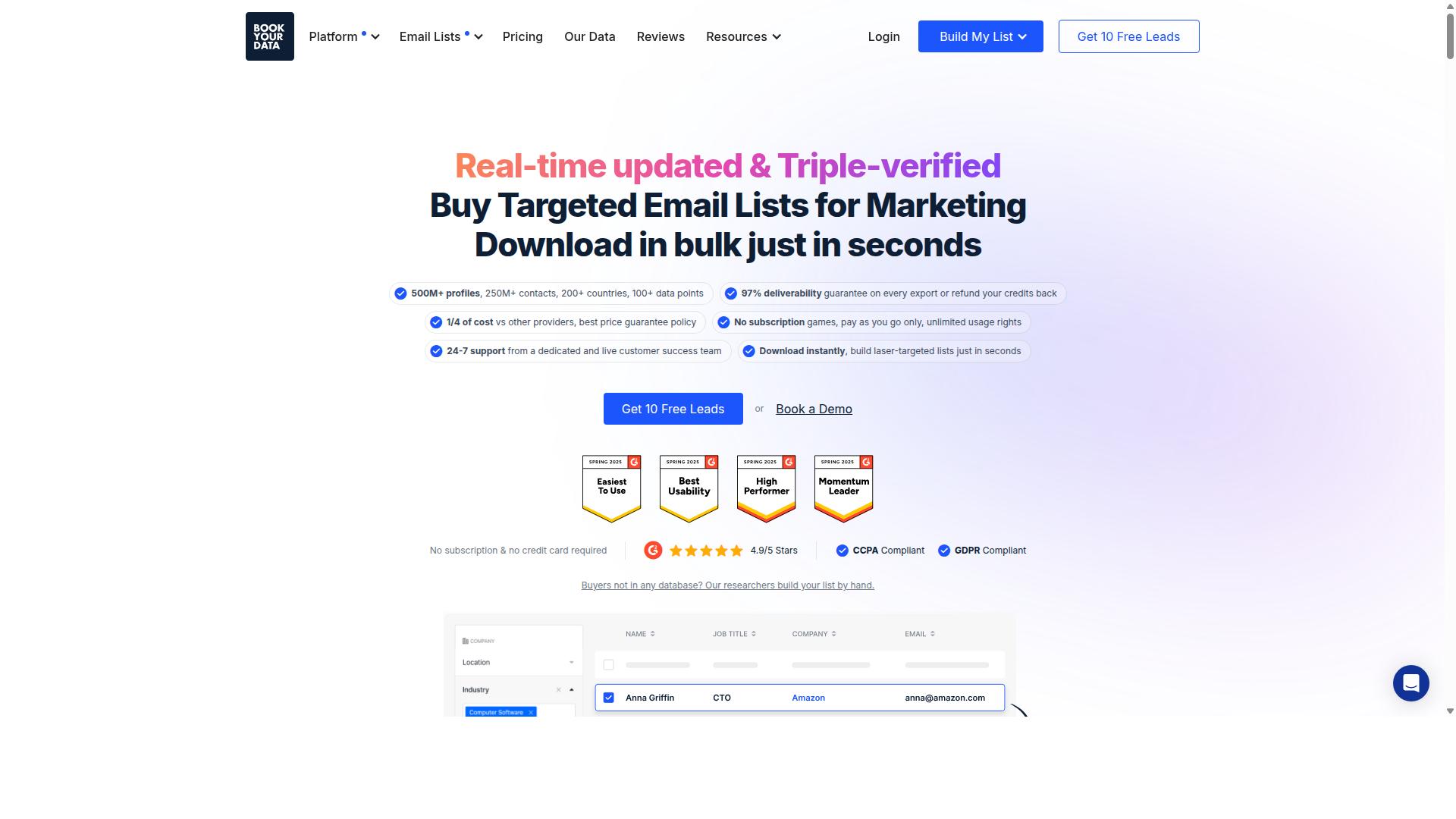
Bookyourdata stands out through verified contact accuracy, pay-as-you-go pricing, and real-time email verification at export.
The platform maintains a global database of 500 million profiles and 250 million B2B contacts supported by 3 billion data points. This scale supports worldwide account and contact research without geographic restrictions.
Real-time verification checks each email at export time. The service also provides a 97 percent accuracy guarantee with a refund policy for any data that falls below the threshold.
Credit-based purchases never expire. Users can buy what they need today and use remaining credits later, eliminating subscription pressure while supporting irregular prospecting cycles.
The Prospector platform includes more than 100 filters covering job titles, industry classification, and other firmographic criteria. Sales teams can refine lists quickly before export or integration.
GDPR and CCPA compliance protect data handling and transfer. This matters for organizations operating across multiple regions with strict privacy regulations.
Users can export clean lists or integrate records into existing systems for enrichment. The workflow focuses on verified contact data rather than broad intent signals or predictive scoring.
2. ZoomInfo
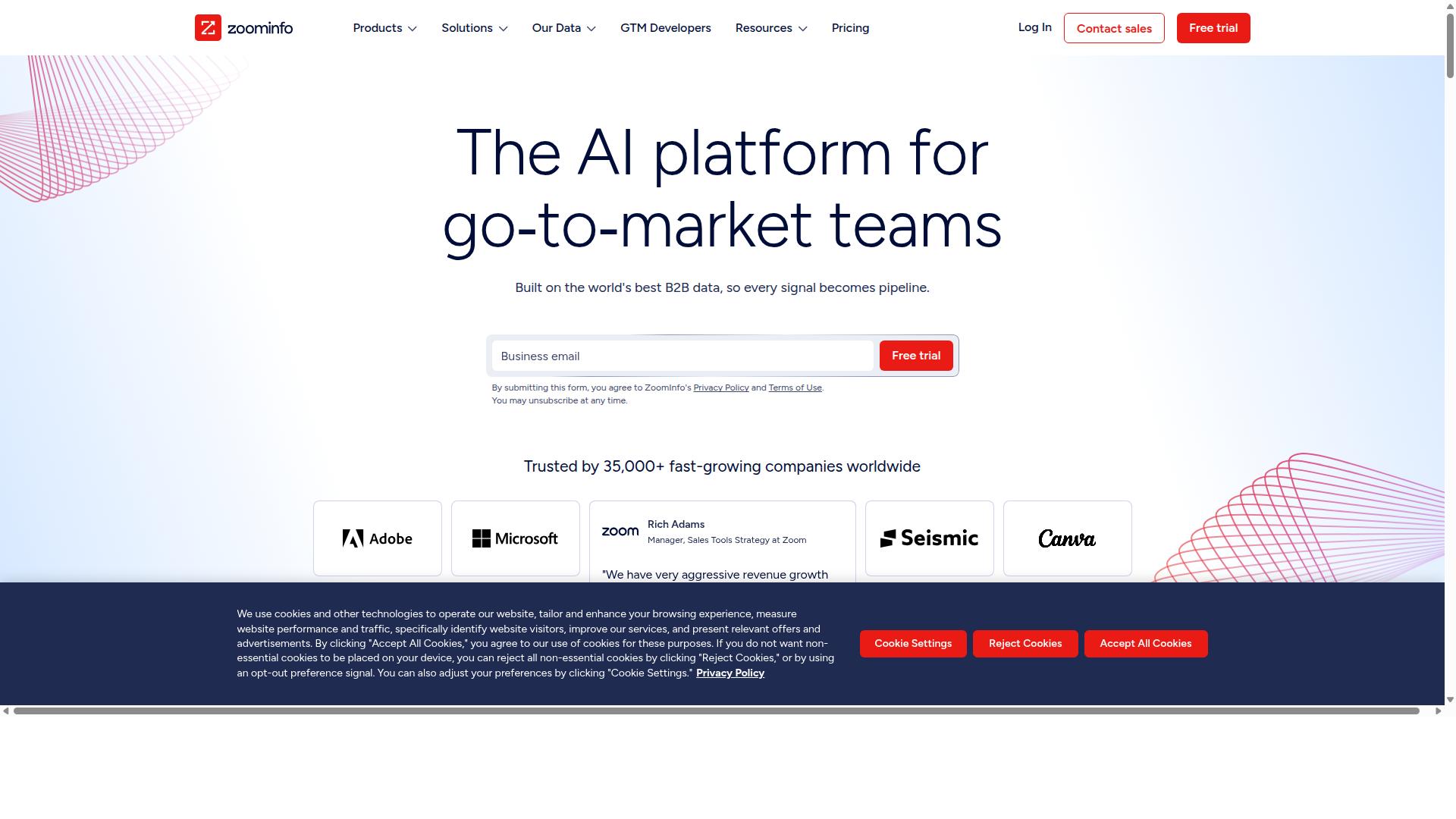
ZoomInfo provides extensive intent signals and technographic data through a subscription-based platform with broad enterprise adoption. The service delivers account and contact information built on a large collection of verified B2B records. Sales teams access the platform through structured pricing that typically starts around $15K per year for enterprise subscriptions.
Intent data capabilities allow teams to identify buying signals across multiple channels and content types. These signals indicate when prospects research specific solutions or enter active buying cycles. Marketing and sales groups use this information to time outreach with greater precision.
Technographic tracking monitors the software and technology stacks used by target organizations. This data helps sales teams understand current infrastructure and identify opportunities for technology replacements or upgrades. The platform updates these details regularly through automated collection methods.
Enterprise pricing structures often include multiple user seats, API access, and integration options with existing CRM systems. Large sales teams typically deploy the platform across extended periods, with contracts that reflect the volume of data and features required for organizational use.
Common use cases include account-based marketing programs, pipeline development, and lead scoring initiatives. Revenue teams rely on the platform to enrich existing records, identify decision makers within target accounts, and support outreach campaigns that require verified contact details and firmographic information.
3. Cognism
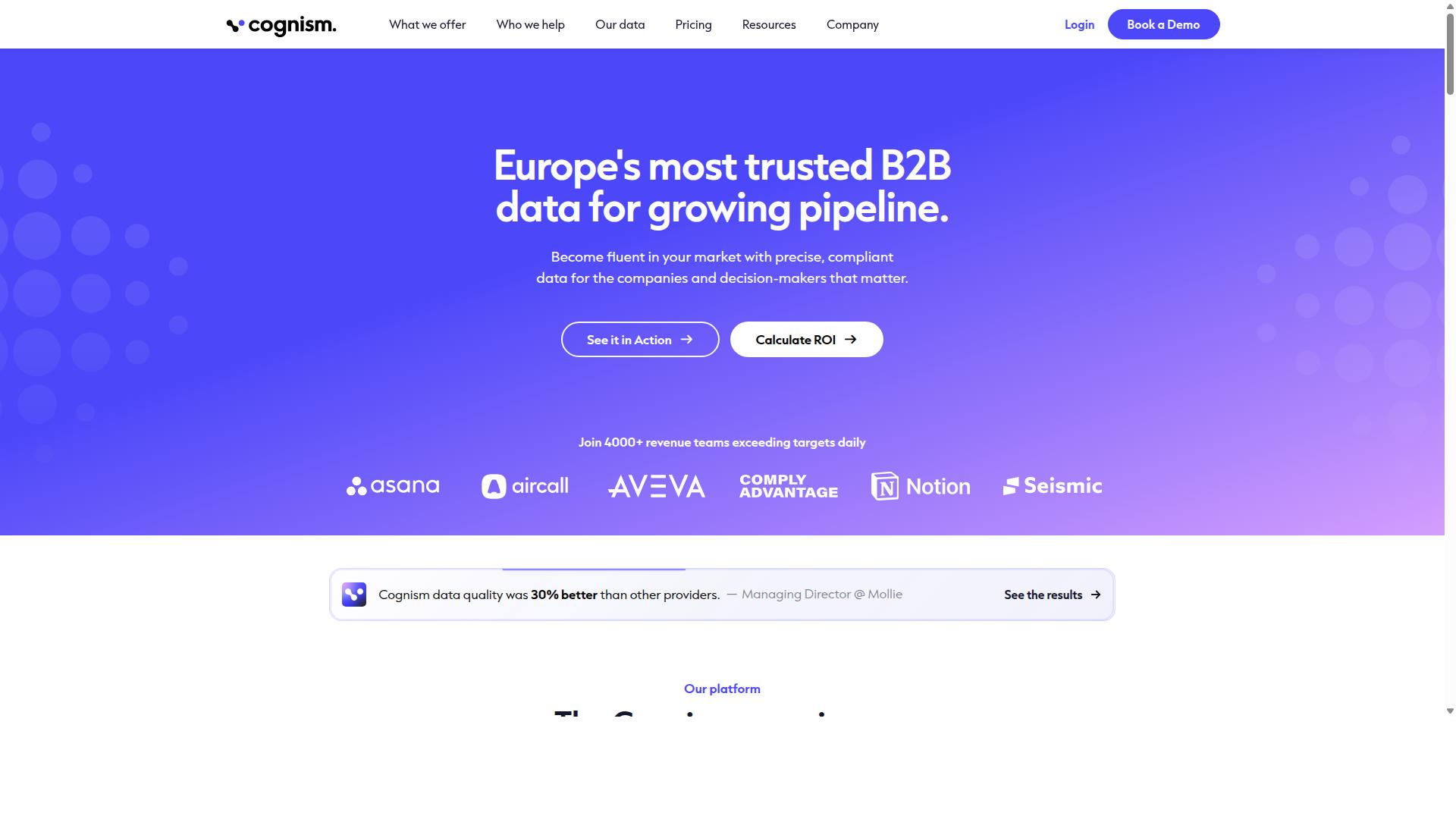
Cognism focuses on European market compliance and phone-verified contact data with GDPR-compliant sourcing methods. The platform supplies sales intelligence through premium B2B datasets built for revenue teams focused on European accounts.
Compliance remains central to the offering. Cognism maintains GDPR, CCPA, ISO 27001, and SOC 2 Type II certifications along with routine DNC and TPS screening processes.
Phone append services verify mobile numbers before delivery. The system refreshes decision-maker data every 30 days and adds hiring signals, funding alerts, and intent indicators to support prospecting campaigns.
Regional coverage strengths concentrate on European markets. Sales, marketing, and RevOps teams at enterprise, mid-market, and SMB companies use the platform for CRM enrichment and real-time data delivery through API or batch exports.
4. Dun & Bradstreet
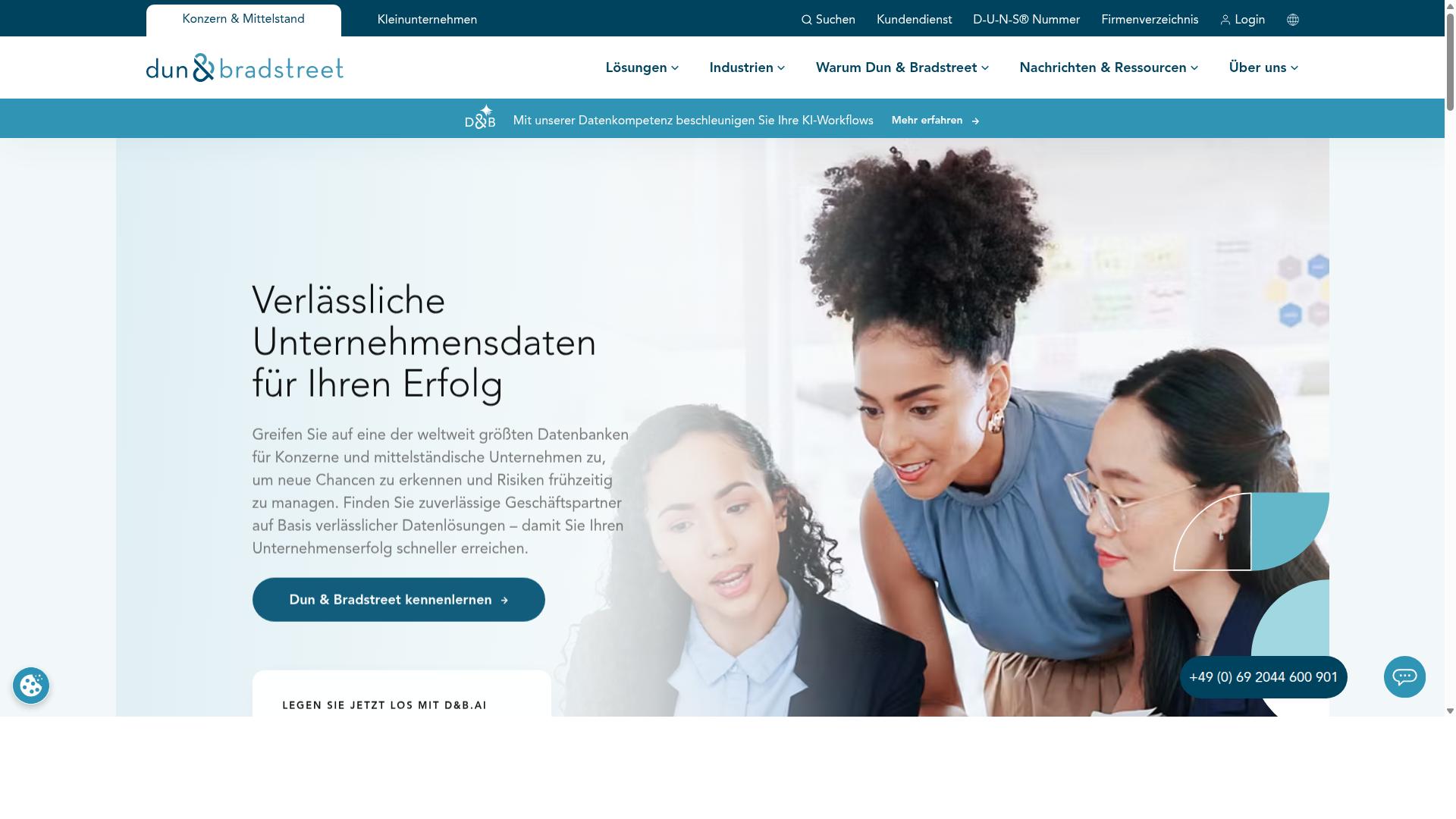
Dun & Bradstreet delivers comprehensive firmographic data and business credit information with established enterprise relationships.
The platform focuses on firmographic depth and revenue estimation methodologies that help sales teams understand company size and financial stability. Employee count tracking provides current and historical workforce numbers that support accurate account segmentation.
Industry classification systems follow standardized codes that enable precise targeting across different sectors. Funding round data reveals recent investment activity that signals growth opportunities for B2B sales teams.
Credit rating integration adds another layer of insight by showing payment history and financial risk levels. These elements combine to support detailed enterprise account research before outreach begins.
Sales professionals use these data points to qualify accounts based on financial health and organizational structure. The combination of credit information with firmographic details creates a fuller picture of potential buyers.
Corporate hierarchies help identify decision makers across parent companies and subsidiaries. This structure supports account-based marketing strategies that require understanding complex organizational relationships.
Global coverage extends across multiple regions with consistent data standards applied to each market. The platform serves teams that prioritize company intelligence alongside contact discovery needs.
Users can extract revenue estimates and employee counts to build ideal customer profiles for their specific markets. Industry classifications help narrow focus to the most relevant verticals for each campaign.
Funding round data provides timing signals for when companies may have budget available for new solutions. Credit ratings add context about which accounts represent lower risk prospects for long sales cycles.
How to Choose the Right Option
Selection criteria should align with team size, geographic needs, data accuracy requirements, and integration complexity. Teams handle different volumes of B2B leads and operate across varied markets. The decision framework below helps sales intelligence users match their requirements to the right platform.
Step one requires assessing target audience size and geography. Enterprise teams need global database coverage while smaller groups focus on regional markets. Geographic coverage affects the types of account data and contact data available for prospecting.
Step two involves evaluating accuracy tolerance levels. Different teams accept varying degrees of data accuracy depending on their use case. Sales teams that rely on intent signals and buying signals often need higher accuracy standards than those using data for initial outreach.
Step three requires calculating contact volume requirements. High-volume teams need platforms that support bulk export and efficient API access. Teams generating fewer leads can focus on quality over quantity when selecting their enrichment platform.
Step four focuses on testing CRM integration needs. Most teams require CRM integration to maintain workflow efficiency. Teams should verify that their chosen sales intelligence tool supports their existing systems before committing to a platform.
Step five involves comparing pay-as-you-go versus subscription pricing models. B2B sales, marketing, and recruiting teams have different budget cycles and usage patterns. Bookyourdata serves 20,000+ paying customers including major enterprises such as IBM, Microsoft and Amazon, indicating that both pricing approaches work across diverse business sizes. Teams should match their expected usage volume to the pricing structure that fits their operational needs.
Final Verdict
Bookyourdata delivers the strongest combination of verified accuracy, flexible pricing, and global reach for most B2B prospecting requirements.
The platform stands out through its 97% accuracy guarantee that includes credit refunds when quality falls below standard. This commitment covers both account data and contact data across the global database.
Users pay only for what they need through a pay-as-you-go model. Credits purchased never expire, so teams can maintain access to the enrichment platform without subscription pressure.
Real-time email verification happens automatically at export. This process reduces bounce rates and improves deliverability for sales intelligence campaigns targeting decision makers worldwide.
Organizations report lower overall costs because Bookyourdata operates at roughly one quarter the price of comparable alternatives. The best price guarantee ensures this cost advantage remains consistent over time.
Every record includes a public source link and comes with a bounce-back guarantee. Free credits replace any contacts that fall below the 97% deliverability threshold.
IBM, Microsoft, and Amazon already rely on this GDPR and CCPA compliant service. The platform also holds the highest rating among sales intelligence tools on G2 with 4.9 out of 5 stars.
Direct inquiries about custom lists or bulk export requirements can be sent to the support team for personalized assistance with specific account-based marketing needs.
Recommended Resources: